Borewell Water Looks Clear—But Is It Safe? When and What to Test
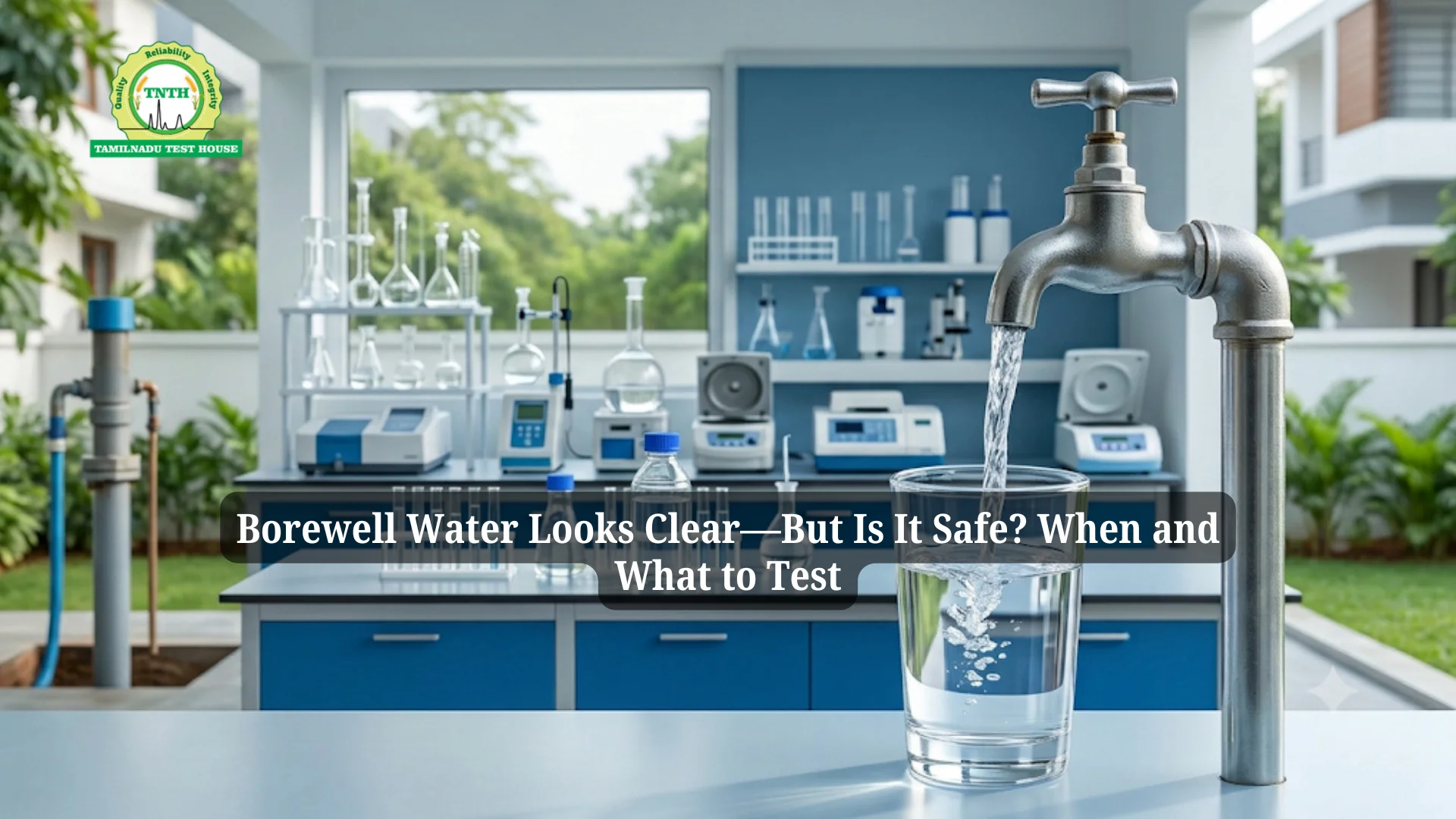
Your borewell water looks clear, has no unusual smell, and flows normally from the tap. Does that mean it is safe for drinking and cooking? Appearance alone cannot answer that question.
Groundwater can contain dissolved chemicals and microorganisms that are invisible to the naked eye. Even water that tastes normal may need treatment before consumption. For households, apartment associations, and businesses, comparing water testing labs in Chennai, understanding when to test, and which parameters to check is a useful starting point.
Why Clear Borewell Water Still Needs Testing
Borewell water comes from underground aquifers. Its quality depends on surrounding geology, nearby activities, and good construction and maintenance. A deep borewell does not automatically guarantee safe water.
Contamination may arise from sewage leakage, agricultural runoff, or other local sources. Naturally occurring minerals can also influence groundwater quality. Changes may happen without an obvious difference in color, taste, or smell.
Laboratory testing helps identify concerns that visual inspection cannot reveal. It also provides a basis for choosing treatment, instead of purchasing equipment based only on assumptions.
When Should You Test Borewell Water?
Before Using a New Borewell
Test a newly commissioned borewell before relying on it for drinking or cooking. Tell the laboratory how the water will be used so it can recommend an appropriate testing panel.
An initial report also provides a baseline for future comparisons.
As Part of Regular Maintenance
Do not wait for the water to develop an unpleasant smell. The CDC recommends annual private-well testing for total coliform bacteria, nitrates, total dissolved solids, and pH. Additional tests depend on local conditions and potential contamination sources.
Discuss a suitable schedule with your laboratory, especially if the water serves several households or a commercial facility.
After Flooding, Repairs, or Noticeable Changes
Arrange additional testing after flooding, suspected sewage entry, borewell repairs, or sudden changes in color, taste, or odor. These events can justify testing outside your routine schedule.
If contamination is suspected, use a known safe source for drinking and cooking while obtaining advice and test results.
What Should Borewell Water Be Tested For?
The right panel depends on the source, intended use, and surrounding risks. A useful assessment can include the following groups.
1. Physical and General Chemical Parameters
Parameters such as color, turbidity, pH, and total dissolved solids help describe the water’s basic characteristics. Hardness, chloride, calcium and magnesium may also be relevant.
However, a handheld TDS reading cannot establish drinking-water safety. It does not replace testing for bacteria or specific chemical contaminants.
2. Microbiological Parameters
Total coliform bacteria and E. coli are important indicators when assessing drinking water. Their detection can signal problems with source protection, storage, or distribution that require investigation.
Water may look clear even when microbiological testing identifies a concern. This is why appearance should never replace laboratory analysis.
3. Chemical Contaminants
Depending on local risks, testing may include nitrate, fluoride, iron, arsenic, lead, or other substances. A laboratory can help select relevant parameters rather than applying the same limited panel to every borewell.
For drinking-water assessment in India, ask how the tested results compare with the applicable requirements of IS 10500, the Indian drinking-water specification. Check which parameters the report covers; a limited panel does not demonstrate compliance with every requirement.
How Should You Collect the Water Sample?
Sample collection affects the usefulness of the result. Contact the laboratory before collecting water and request its instructions, containers, and delivery requirements.
Explain whether you want to assess raw borewell water, stored tank water, or water after treatment. These sampling points answer different questions.
Follow the laboratory’s directions for collection, labeling, transport, and timing. Microbiological samples require particular care, so avoid using an ordinary household bottle unless the laboratory specifically approves it.
Does a Water Purifier Remove Every Contaminant?
No single treatment system addresses every water-quality problem. Treatment should match the contaminants identified in the report.
Boiling can kill harmful microorganisms, but it does not remove dissolved salts, heavy metals, or most chemical contaminants. Similarly, installing a purifier does not remove the need to verify its performance.
Where treatment is required, test the treated water to check whether the identified problem has been addressed before relying on it for consumption.
What If the Borewell Supplies a Farm?
Water suitable for one purpose may not suit another. Irrigation assessment considers how water quality could affect soil conditions and crop performance.
Farmers searching for an agricultural soil testing lab should discuss both soil and irrigation-water analysis. Reviewing these together can support better decisions about water use and soil management.
Are Wastewater Testing Methods Suitable for Borewell Water?
Wastewater testing methods are selected for questions such as sewage quality, effluent characteristics, and treatment performance. Drinking-water assessment has a different purpose.
Some parameters may overlap, but a wastewater report cannot automatically establish whether borewell water is suitable for drinking. Always state the intended use when requesting analysis.
Choose Testing Based on Your Water’s Use
When comparing water testing labs in Chennai, ask about the recommended panel, the sample Tamil Nadu collection process, the applicable methods, and the report interpretation.
Tamilnadu Test House provides water and environmental testing services. Share your water source, intended use, and any recent changes when requesting testing so the assessment addresses your actual concern.
Clear water is reassuring to see. A suitable laboratory assessment provides the evidence needed to decide what to do next.