LC-MS/MS Testing for Nitrosamine Impurities and PFAS: A Complete Industry Guide
What is LC-MS/MS testing?
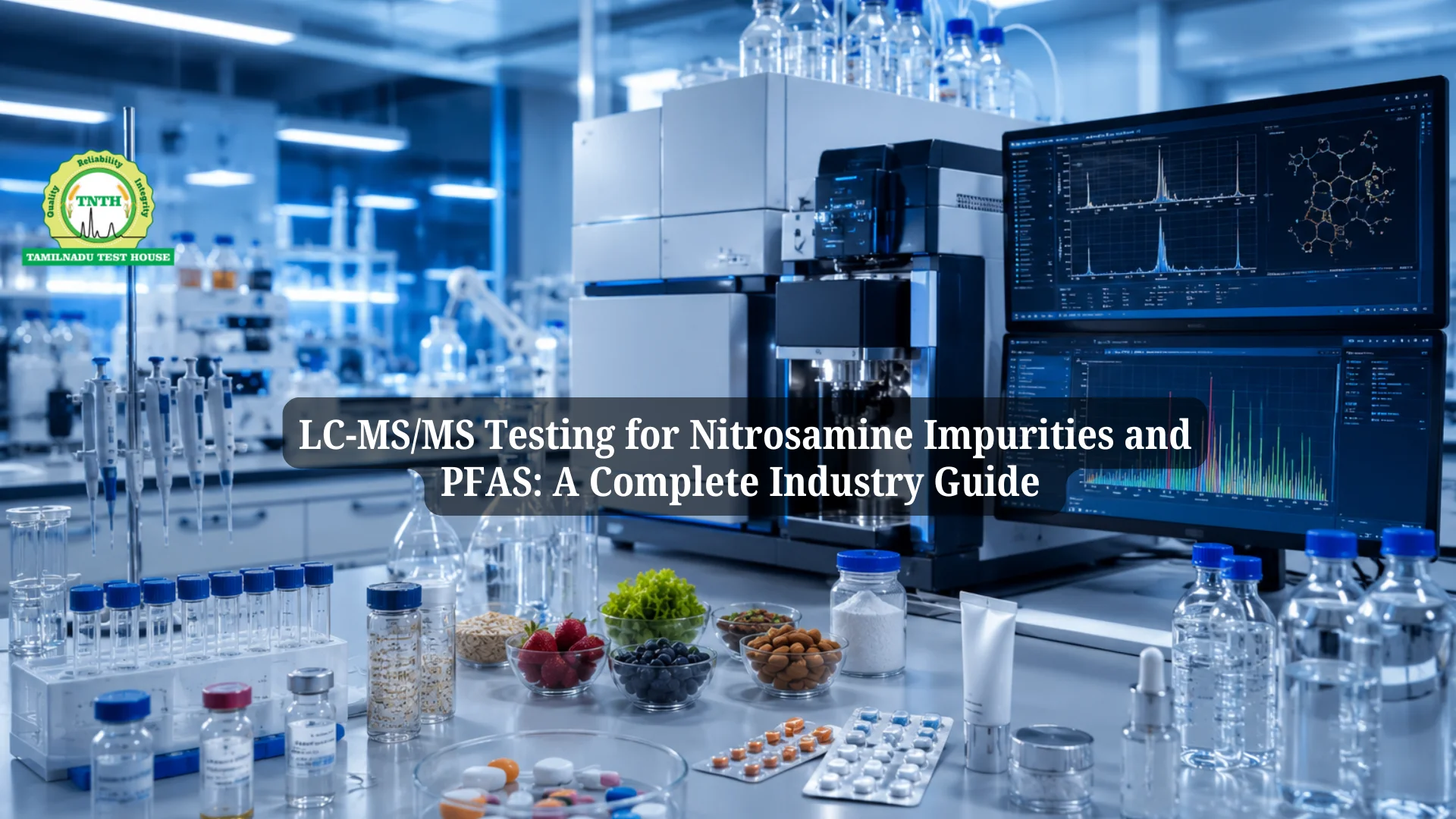
Scientists rely on LC‑MS/MS as their go‑to tool to catch even the tiniest traces of harmful chemicals. Think of it as a super-sensitive detector that can detect contaminants like nitrosamine impurities in medicines or PFAS in food and water—substances that can be dangerous even in very small amounts.
Today this technology is routinely used by pharmaceutical companies, food producers, environmental laboratories and regulators because it helps to ensure products are safe and meet rigorous global standards. As governments tighten product safety regulations, LC-MS/MS testing is a must-have for:
- Protecting consumers from hidden dangers
- Maintaining quality and trust in products
- Getting countries to comply
- Supporting risk assessment before product launch
Why Nitrosamine Impurity Testing Matters
The goals of nitrosamine testing are patient safety, medication quality assurance, and compliance with international safety regulations. As genotoxic contaminants, nitrosamines have the potential to harm DNA and cause cancer. Testing is therefore essential at every stage of the manufacturing of pharmaceuticals:
- Pharmaceutical APIs: Safe and pure active ingredients are required.
- Drug products: Completed medications must be free of dangerous impurities.
- Raw materials: If unmonitored, starting materials may pose risks.
- Excipients: To prevent hidden risks, even inactive ingredients need to be examined.
- Manufacturing contamination: Nitrosamines may be inadvertently produced by machinery and procedures.
- Patient safety: Prevents exposure to cancer-linked chemicals.
- Batch release: Verifies that each batch satisfies stringent international standards prior to patient delivery.
At the end of the day, this testing is about protecting patients and ensuring every pill is safe to swallow.
What are PFAS chemicals?
PFAS are man‑made chemicals that make products tougher—like non‑stick pans or waterproof jackets. The problem? They don’t break down easily, earning the nickname ‘forever chemicals,’ and that persistence can harm both our health and the environment.
Industries That Require Testing
Any industry that impacts human health, food, water or the environment utilizes LC-MS/MS testing to verify product safety and regulatory compliance. From the medicines we take to the food we eat and the water we drink, LC‑MS/MS testing quietly works behind the scenes across industries.
Pharmaceuticals
To confirm the absence of genotoxic impurities in APIs, drug products, excipients and raw materials before batch release.
Food and Beverage
Find PFAS, pesticide residues and nitrosamines that can get into packaged foods, water and drinks.
Environmental Laboratories
To monitor soil, air, and water for persistent contaminants, such as PFAS, that threaten ecosystems and public health.
Personal Care & Cosmetics
To test for harmful trace chemicals and ensure safety in creams, lotions and beauty products.
Regulatory Authorities
LC-MS/MS data is used by agencies around the world to enforce compliance, establish safety limits and protect consumers.
Chemical and Manufacturing
Prevent contamination during production and ensure that raw materials meet strict quality standards.
Sample Types Accepted
LC‑MS/MS can handle everything from medicines and food to water and blood, making it one of the most versatile testing methods for safety and compliance. This versatility is why LC‑MS/MS is trusted everywhere — from hospital labs to food safety checks.
Workflow Testing
Collect → Prepare → Analyze → Review → Report. A simple chain that ensures nothing harmful slips through.
Sample Collection – Collection of APIs, drug products, food, water or environmental samples.
Preparation – Samples are processed to remove interference and concentrate target compounds.
Analysis (LC-MS/MS) – Ultra-sensitive instruments detect nitrosamines, PFAS, or other contaminants at trace levels.
Data Review – Results checked against regulatory standards.
Reporting – Accurate and compliant reports to support decision-making and batch release.
Regulatory Requirements
Choosing an NABL‑accredited lab means peace of mind — your results are credible, recognized worldwide, and defendable in front of regulators.
- Pharmaceuticals: Global regulations (US FDA, EMA, CDSCO, WHO) compliance.
- Food & Environment: Standards set by FSSAI, CPCB, EPA, and EU regulations.
- Documentation: NABL/ISO 17025 accredited laboratories give traceable, defensible data.
- Compliance: Mandatory testing before product approval, import/export, or batch release.
Benefits of Choosing an NABL Laboratory
- Accreditation Assurance – NABL ISO/IEC 17025 certification guarantees credibility.
- Validated Methods – Standardized protocols ensure accuracy and reproducibility.
- Global Recognition – NABL accreditation is accepted internationally.
- Risk Reduction – Reliable results prevent recalls, fines, and reputational damage.
- Confidence – Trusted by regulators, manufacturers, and consumers alike.
Conclusion
Tamil Nadu Test House in Chennai stands as more than a lab—it’s a guardian of safety, ensuring purity and protecting lives.
It is an NABL-accredited laboratory, providing reliable, high-precision analysis of pharmaceutical, food, environmental, and cosmetic samples. We strictly follow ISO-17025 standards and regulatory guidelines. House ensures product safety, quality assurance, and compliance for industries across India. The lab stands as a trusted partner for accurate, compliant, and timely testing solutions—helping manufacturers and regulators safeguard public health and maintain confidence in their products.
Frequently Asked Questions
Q1: What are nitrosamines?
Harmful impurities linked to cancer are formed during manufacturing.
Q2: What are PFAS?
“Forever chemicals” found in water, food, and packaging are harmful even in small amounts.
Q3: Why LC-MS/MS?
It’s the most sensitive method to detect contaminants at ultra-trace levels.
Q4: Who needs testing?
Pharma, food, cosmetics, environmental labs, and regulatory bodies.
Q5: How long does testing take?
Typically 3–7 working days, depending on sample type and lab capacity.